
For decades, ceilings have been treated as the quietest surface in a room — painted white, left untouched and largely ignored. Walls carried colour and pattern, floors carried materiality, and ceilings simply disappeared into the background.
Today, that hierarchy is changing.
Across contemporary interiors — from restaurants and boutique hospitality spaces to private homes — designers are rediscovering the ceiling as what many now call the fifth wall: a surface capable of transforming atmosphere, scale and emotional experience.
Rather than acting as a boundary, the ceiling has become an opportunity.
Why Ceilings Were Forgotten
Modern interior design long prioritised simplicity and visual restraint. Minimalist movements encouraged clean lines and neutral palettes, often pushing ceilings into invisibility.
Practical considerations also played a role. Lighting systems, air-conditioning and structural elements made ceilings feel technical rather than creative.
Yet historically, ceilings were never secondary. Grand hotels, historic residences and civic buildings frequently used painted or decorative ceilings to create drama and identity.
What we are seeing today is less a new trend than a rediscovery.
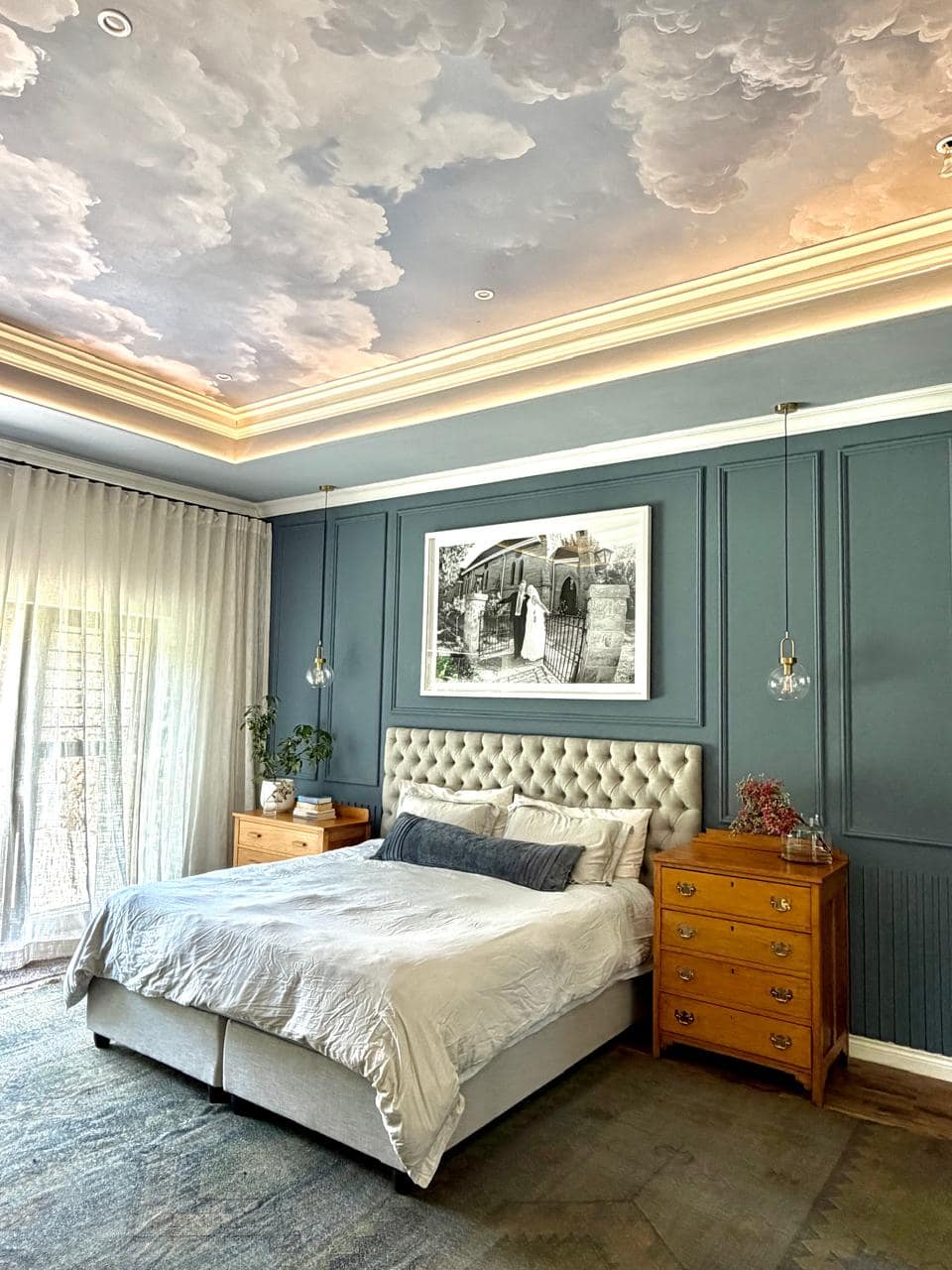
The Psychological Power of Looking Up
Ceilings influence how a space feels in ways occupants rarely articulate consciously. When pattern or texture extends upward:
- rooms feel more immersive
- proportions appear softened
- intimacy increases in large spaces
- transitions between surfaces feel seamless
Designers increasingly recognise that guests and residents experience spaces three dimensionally. Ignoring the ceiling leaves a significant portion of that experience unexplored.
A designed ceiling changes perception before a person even understands why.
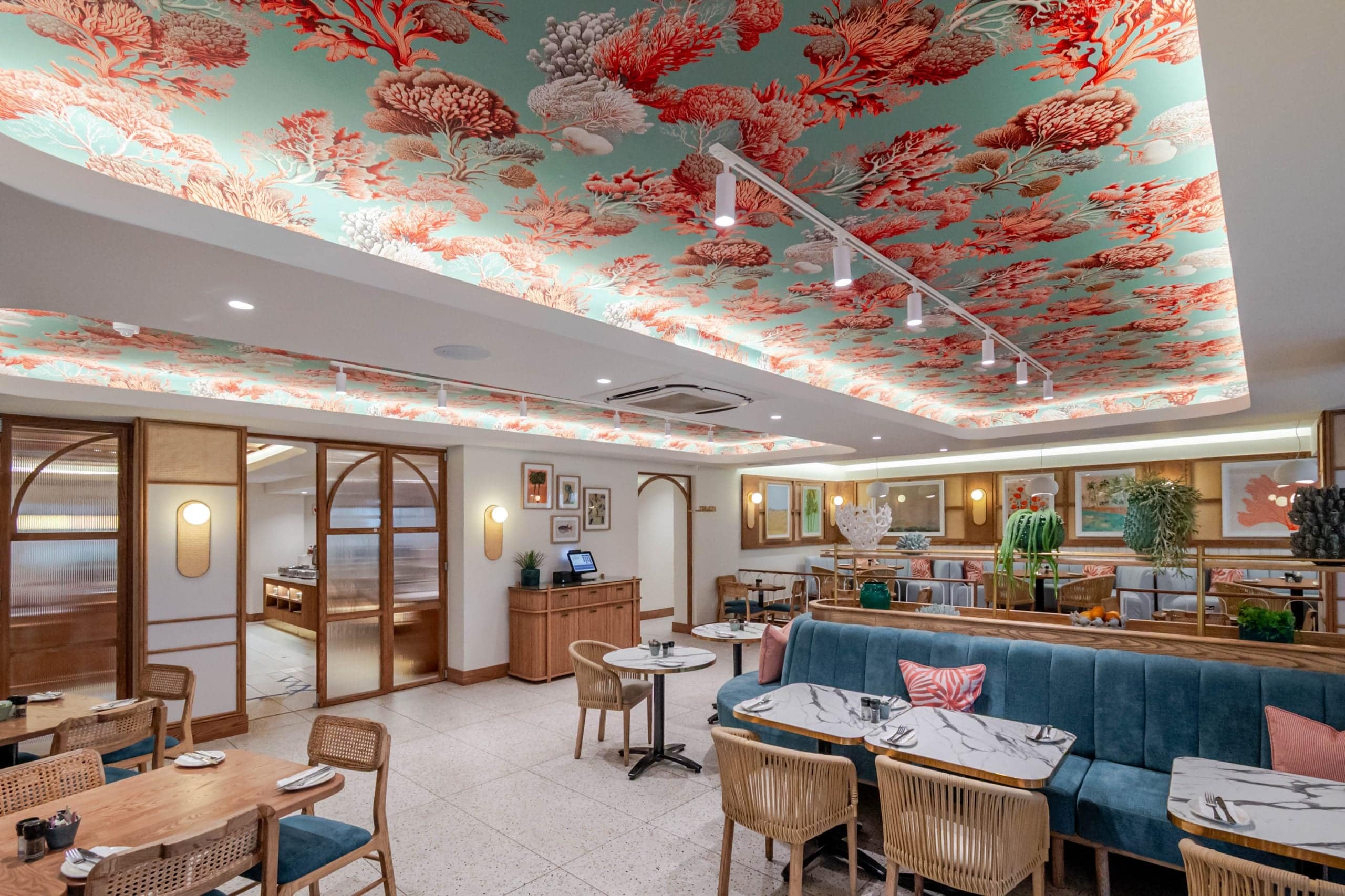
From Feature Wall to Fully Wrapped Space
As wallcovering technology has evolved, applying design across multiple surfaces has become both technically achievable and creatively compelling.
Rather than isolating pattern on a single feature wall, designers now extend materials across walls and ceilings to create cohesive environments.
This approach allows interiors to feel intentional rather than decorated — environments shaped by atmosphere rather than individual design gestures.
Restaurants use ceilings to define mood and energy. Homes use them to create intimacy and personality. Hospitality environments use them to create memorability.
The ceiling becomes part of the architecture itself.
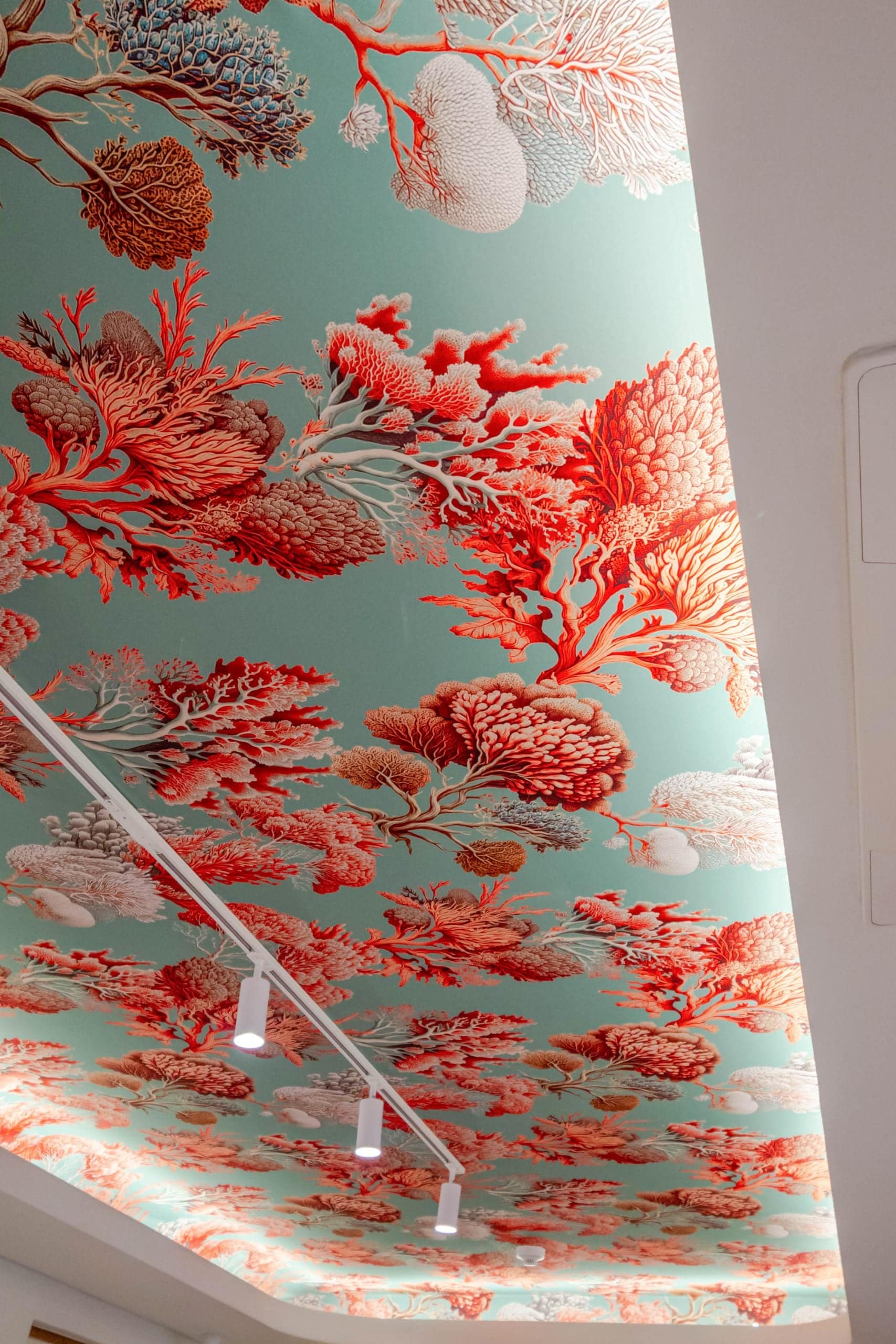
Real Spaces, Real Applications
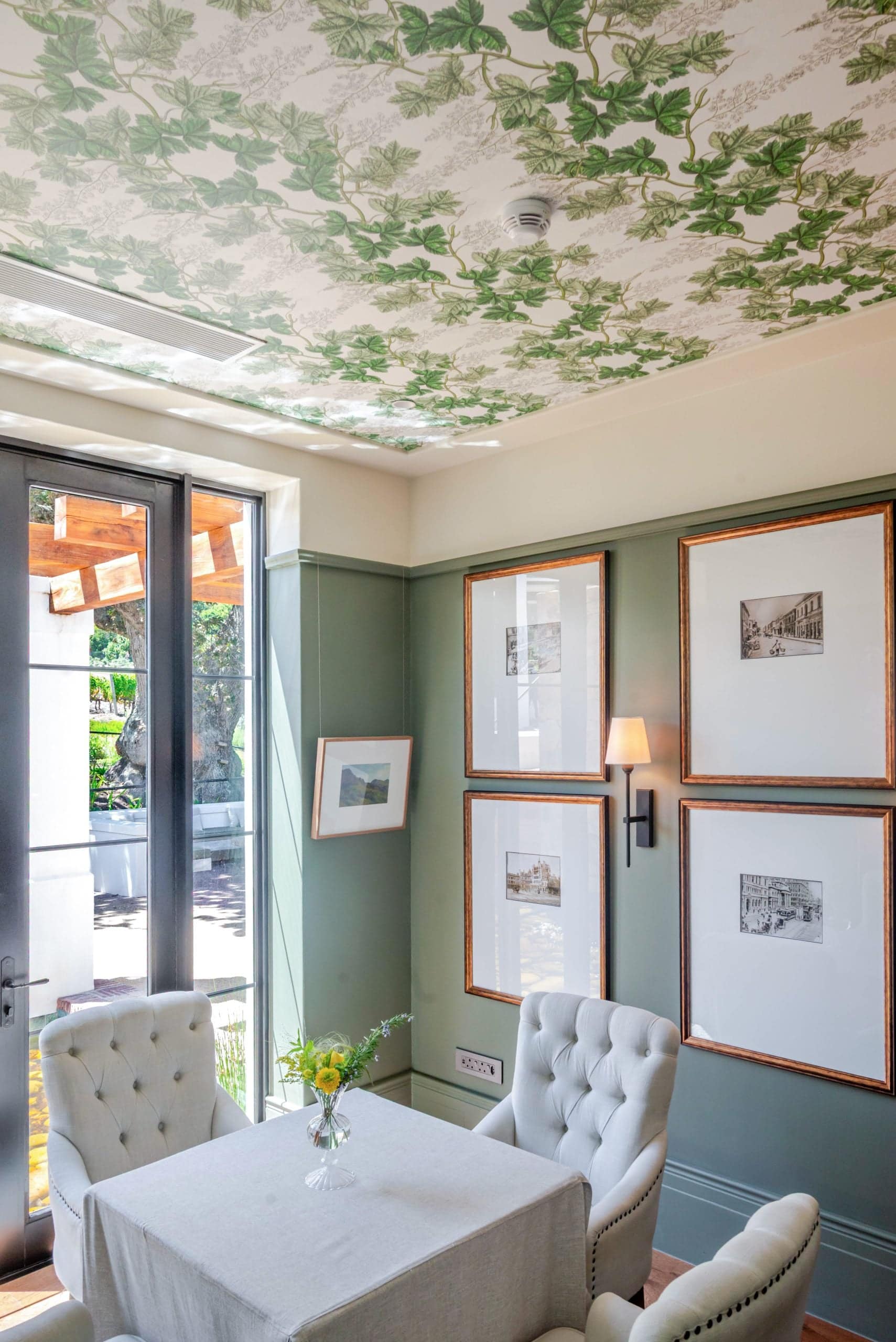
Across recent Cara Saven Wall Design projects, ceilings have played an increasingly central role in shaping interiors.
In restaurant environments, ceiling applications introduce rhythm and visual warmth, drawing attention upward and balancing busy social spaces.
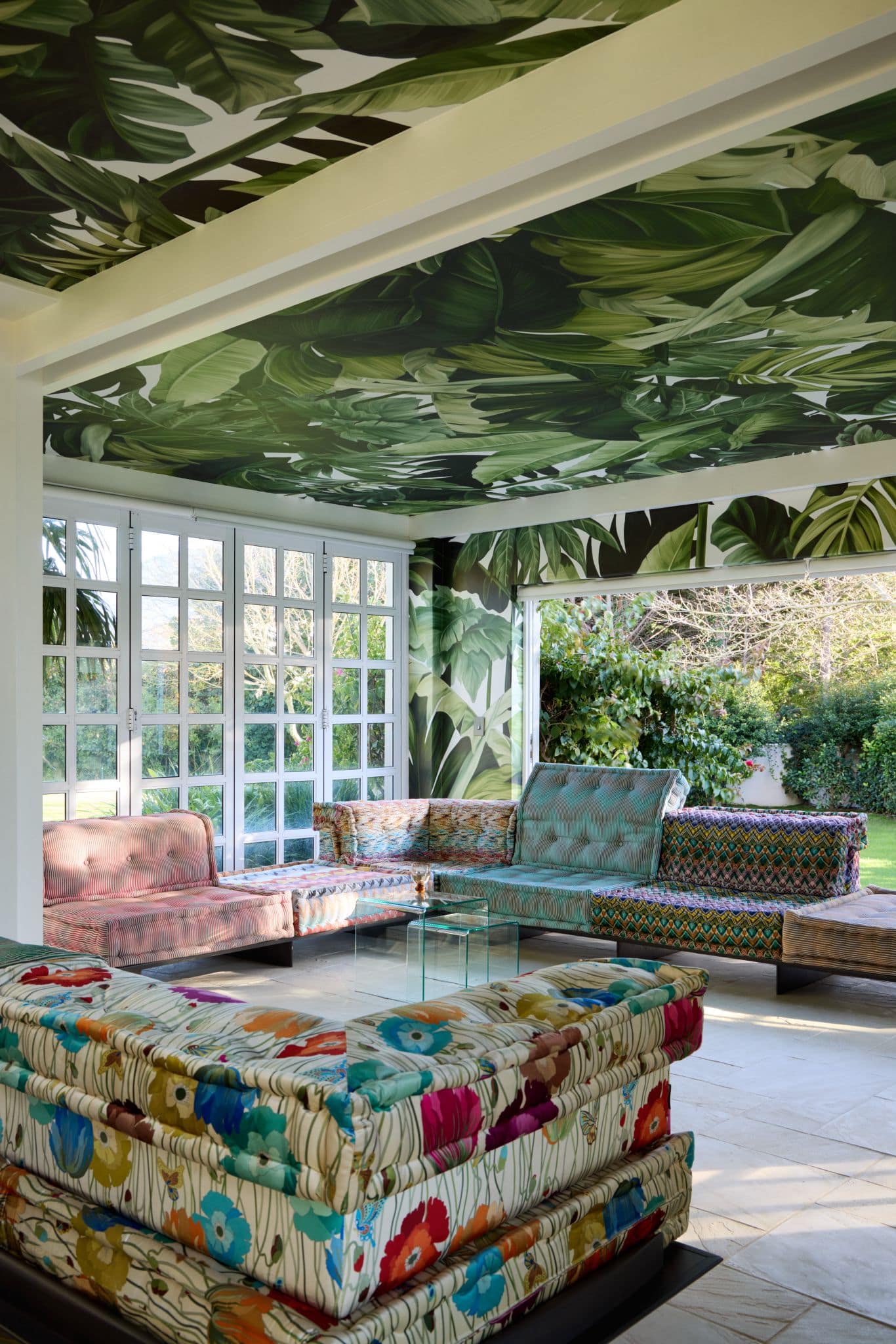
Within residential interiors, ceiling treatments create unexpected moments — transforming bathrooms, dining areas and lounges into immersive environments where pattern surrounds rather than sits beside occupants.
These applications demonstrate that impactful design does not always require structural change. Sometimes, redefining a single overlooked surface can transform the entire spatial experience.
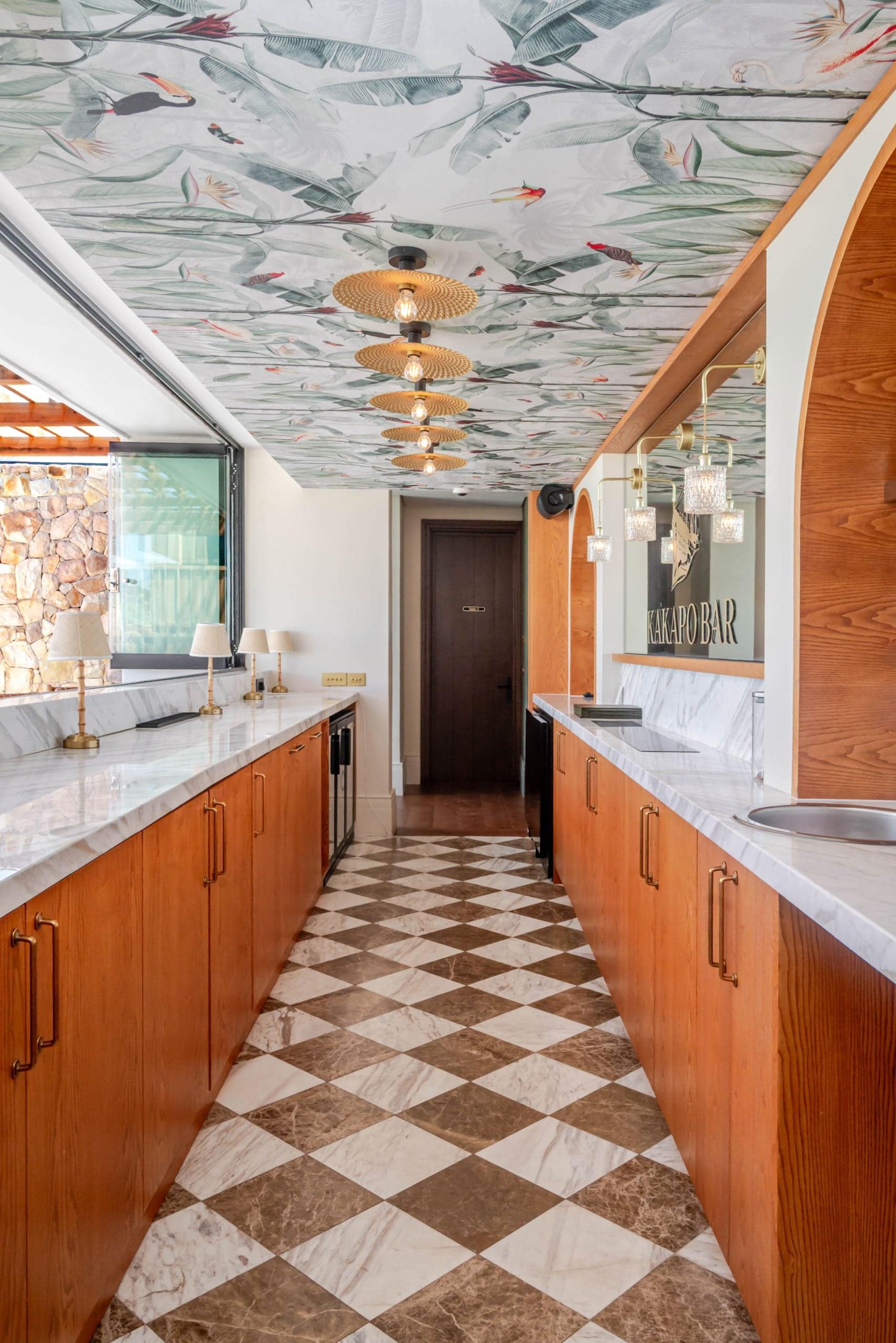
Why Wallcoverings Enable the Fifth Wall
Wallpaper and wallcoverings are uniquely suited to ceiling applications because they allow continuity of pattern, colour and texture without complex construction.
Modern materials also make ceiling installations more practical than ever before, offering durability, stability and cleanability across different environments.
When thoughtfully specified, wallcoverings allow ceilings to move from passive surfaces to active design elements — expanding the designer’s toolkit without increasing architectural complexity.
Designing in Three Dimensions
The growing focus on ceilings reflects a broader shift in interior design thinking. Spaces are no longer conceived as collections of individual surfaces but as immersive environments experienced from every angle.
Designers are increasingly asking not just what happens on the walls, but what happens around the person occupying the space.
In this context, the ceiling becomes essential — the final surface that completes spatial storytelling.
Looking Forward
As interiors continue to prioritise experience and atmosphere, the role of the ceiling will only expand. Whether subtle or expressive, ceiling design introduces depth and memorability without overwhelming a space.
The fifth wall is no longer overlooked.
Designers are simply looking up again.